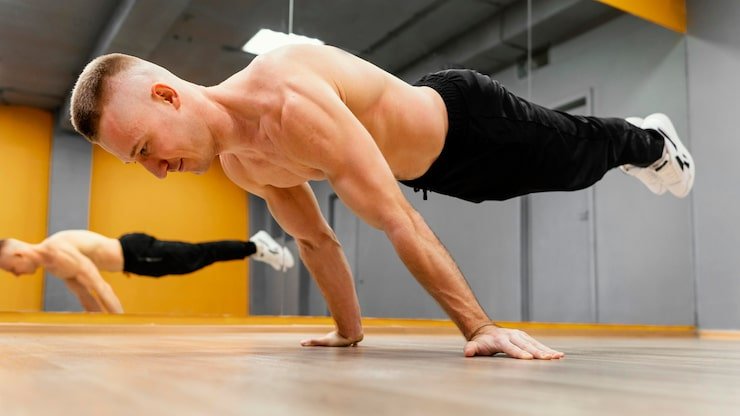
A calisthenics ab workout is an effective way to train the abdominal and core muscles using bodyweight resistance rather than traditional gym machines. Calisthenics focuses on controlled movements, body positioning, stability, and progressive difficulty. This makes it useful for beginners as well as people working toward advanced skills such as L-sits, hanging leg raises, and other bodyweight movements.
A strong core is about much more than achieving visible abdominal muscles. The core helps stabilize the body, transfer force between the upper and lower body, maintain posture, and support movements such as pushing, pulling, jumping, and balancing. Bodyweight training can also be performed with little or no equipment, making it convenient for home workouts, outdoor training, and travel.
What Is Calisthenics Core Training?
Calisthenics is a form of resistance training that primarily uses body weight instead of external weights. Exercises can be modified to match different fitness levels, allowing beginners to start with easier movements and gradually progress toward more demanding variations.
Core-focused calisthenics goes beyond performing endless repetitions of traditional crunches. It can involve movements and holds that challenge the abdominal muscles to stabilize the spine and pelvis while the arms and legs move.
Important core functions include:
- Maintaining a stable torso
- Resisting excessive spinal extension
- Controlling rotation
- Supporting balance
- Stabilizing the pelvis
- Connecting upper- and lower-body movement
- Maintaining body tension during advanced skills
This broader approach can make core training more useful for general fitness and calisthenics progression.
Benefits of Bodyweight Ab Training
There are several reasons to include bodyweight core exercises in a regular fitness routine.
No Expensive Equipment Required
Many exercises can be performed using only a floor and enough space to move safely. A pull-up bar can be added later for exercises such as hanging knee raises and leg raises.
This makes bodyweight training convenient for people who do not have access to a traditional gym.
Builds Functional Core Strength
A strong core helps the body remain stable during movement. Instead of training the abdomen only through repeated bending, calisthenics can challenge the body to resist unwanted movement and maintain controlled positions.
Easy to Progress
Bodyweight exercises can become more difficult by increasing the lever length, extending the legs, adding pauses, increasing hold time, or moving toward a more advanced variation.
Supports Other Exercises
Core strength is important for many calisthenics movements. Push-ups, pull-ups, dips, handstands, L-sits, and other skills can all benefit from better body control.
Convenient for Home Workouts
Because many movements require little or no equipment, a short routine can be completed at home, outdoors, or while traveling.
Best Beginner Exercises
Beginners should focus on control rather than trying to perform the most advanced exercise immediately.
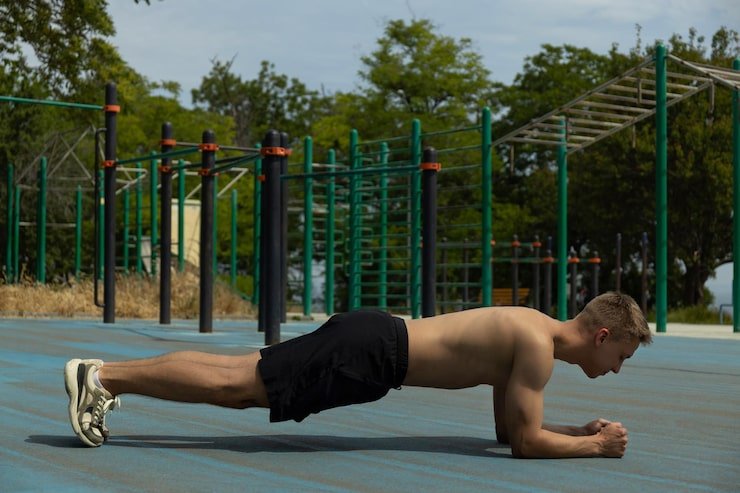
Plank
The plank is one of the simplest ways to practice full-body bracing.
Start with your forearms or hands on the floor and keep your body in a straight line. Engage your abdominal muscles and avoid allowing your hips to sag.
Try holding the position for 15 to 30 seconds initially. As your control improves, gradually increase the duration.
Dead Bug
The dead bug trains the ability to stabilize the torso while the limbs move.
Lie on your back with your arms raised and knees bent. Slowly extend the opposite arm and leg while keeping your lower back controlled against the floor.
Move slowly rather than trying to complete many repetitions quickly.
Reverse Crunch
The reverse crunch focuses on controlled movement of the pelvis and lower trunk.
Lie on your back with your knees bent. Brace your abdomen and gently bring your knees toward your torso while lifting the pelvis slightly from the floor.
Avoid swinging the legs or using momentum.
Bird Dog
The bird dog challenges core stability and coordination.
Begin on your hands and knees. Extend one arm and the opposite leg while keeping the torso stable. Return to the starting position and switch sides.
This movement is particularly useful for practicing control rather than simply creating fatigue.
Intermediate Exercises to Try
Once basic movements become comfortable, you can gradually introduce more challenging variations.
Hollow Body Hold
The hollow body position is particularly useful in calisthenics because it teaches full-body tension.
Lie on your back and lift your shoulders and legs slightly from the floor. Keep your lower back controlled against the ground.
Beginners can keep the knees bent or raise the legs higher. As strength improves, the legs can be extended farther.
Mountain Climbers
Mountain climbers combine core stabilization with repeated leg movement.
Start in a high plank position and bring one knee toward the chest. Return it and alternate sides.
Keep your shoulders stable and avoid allowing your hips to rise excessively.
Plank Shoulder Taps
Start in a high plank and slowly lift one hand to touch the opposite shoulder. Return it to the floor and alternate sides.
The goal is to minimize rotation through the hips.
Leg Raises
Leg raises can become significantly more difficult as the legs move farther from the body.
Lie on your back and slowly raise and lower your legs while maintaining control. If your lower back begins to arch excessively, reduce the range of motion.
Advanced Calisthenics Ab Exercises
Advanced movements should be introduced gradually. Technique is more important than simply completing a difficult exercise.
Hanging Knee Raises
Using a secure pull-up bar, hang with your arms extended. Bring your knees toward your chest while keeping the movement controlled.
This is an accessible progression before attempting straight-leg hanging raises.
Hanging Leg Raises
Once hanging knee raises become manageable, the legs can gradually be straightened.
The exercise requires significant control and should not be performed by swinging the body.
L-Sit
The L-sit is an iconic calisthenics skill that challenges the core, hip flexors, shoulders, and arms.
Support your body using parallel bars, sturdy parallettes, or another safe elevated surface. Extend the legs forward and hold them as high as possible.
Beginners can start with tucked knees before progressing toward straight legs.
Dragon Flag
The dragon flag is an advanced bodyweight movement popular in calisthenics and strength training. It requires substantial core control and should not be attempted before developing adequate strength.
A safer approach is to progress through easier variations and focus on maintaining body alignment.
Sample Beginner Routine
A beginner does not need a long workout to start building core strength.
| Exercise | Sets | Reps or Time | Rest |
|---|---|---|---|
| Plank | 3 | 20–30 seconds | 30–45 sec |
| Dead Bug | 3 | 8–10 each side | 30–45 sec |
| Reverse Crunch | 3 | 8–12 | 45 sec |
| Bird Dog | 3 | 8–10 each side | 30–45 sec |
| Hollow Hold | 2 | 10–20 seconds | 45 sec |
Perform each movement slowly and stop if you lose proper form.
The routine can be adjusted according to your current fitness level. Current calisthenics guidance commonly emphasizes controlled technique and progressive difficulty rather than performing extremely high numbers of repetitions.
Intermediate Routine
Once the beginner routine becomes easy, you can increase the difficulty.
| Exercise | Sets | Reps or Time | Rest |
|---|---|---|---|
| Hollow Body Hold | 3 | 20–30 sec | 45 sec |
| Reverse Crunch | 3 | 12–15 | 45 sec |
| Plank Shoulder Tap | 3 | 10–15 each side | 45 sec |
| Leg Raise | 3 | 8–12 | 60 sec |
| Mountain Climber | 3 | 20–30 total | 45 sec |
| Side Plank | 2 | 20–30 sec each side | 45 sec |
You do not need to perform every possible abdominal exercise in one session. A balanced selection of movements is generally more useful than simply adding more exercises.
How to Progress Safely
Progression is one of the most important principles of calisthenics.
If you can comfortably complete an exercise with excellent technique, you can gradually make it more challenging.
For example:
Plank progression
Knee plank → standard plank → longer hold → shoulder taps → harder variations
Leg raise progression
Bent-knee raise → controlled knee raise → straight-leg raise → hanging knee raise → hanging leg raise
Hollow hold progression
Tucked hold → one-leg extension → longer hold → straight-leg hollow hold
Progress does not always mean performing more repetitions. You can also increase difficulty by using a longer lever, slowing the movement, adding pauses, or improving your range of motion.
Bodyweight training can be progressed through repetitions, sets, tempo, range of motion, pauses, and more difficult variations.
How Often Should You Train Your Abs?
Training the core every day is not necessary for most people. Muscles need time to recover, particularly when workouts are challenging.
For many beginners, two focused core sessions per week can be a practical starting point. Other full-body workouts may also involve the core indirectly.
Rather than training until extreme soreness, focus on consistent sessions with gradual progression.
If you are also doing full-body calisthenics several times per week, remember that exercises such as push-ups, pull-ups, squats, and other movements can already place demands on your core.
How to Improve Your Form
Good form is more important than speed.
Control Every Repetition
Avoid swinging, bouncing, or using momentum to complete an exercise.
Brace the Core
Think about creating tension around your entire midsection rather than simply pulling your stomach inward.
Control Your Breathing
Do not hold your breath unnecessarily. Maintain controlled breathing while keeping the torso stable.
Stop Before Technique Breaks Down
If your lower back starts arching excessively during a floor exercise, reduce the range of motion or choose an easier variation.
Progress Gradually
Advanced movements can place considerable demands on the shoulders, hips, and spine. Build the necessary foundation before attempting difficult skills.
Common Mistakes to Avoid
Doing Too Many Repetitions
Hundreds of rushed repetitions are not necessarily better than a smaller number of controlled repetitions.
Ignoring the Lower Back
If the lower back repeatedly arches during an exercise, the movement may be too difficult or the technique may need adjustment.
Progressing Too Quickly
Jumping directly from basic crunches to advanced hanging or lever exercises can create unnecessary difficulty.
Training Only the Front of the Core
A complete core routine should include different functions, such as resisting extension, controlling rotation, and maintaining lateral stability.
Neglecting Recovery
Core muscles also require recovery. More training is not automatically better.
Can Calisthenics Build Visible Abs?
Calisthenics can strengthen and develop the abdominal muscles, but visible definition depends on more than exercise alone.
Body composition, genetics, nutrition, activity levels, and overall training all influence how visible abdominal muscles become. Performing more abdominal exercises does not specifically remove fat from the stomach.
The primary goal should therefore be building strength, control, and overall fitness rather than chasing a particular appearance.
Safety Tips for Beginners
Before starting a new exercise program, consider your current fitness level and any physical limitations.
Start with movements that you can perform comfortably. Use a stable surface and make sure any equipment, such as a pull-up bar, is securely installed.
Stop exercising if you experience sharp or unusual pain. Normal muscular effort is different from pain caused by an injury.
People with existing injuries or medical concerns should consider discussing their planned exercise routine with an appropriately qualified healthcare or fitness professional.
Key Points to Remember
- Bodyweight exercises can effectively train the core.
- Beginners should prioritize stability and technique.
- Planks, dead bugs, bird dogs, and reverse crunches are useful starting exercises.
- Hollow holds can help develop body tension.
- Hanging exercises require appropriate equipment and progression.
- L-sits are advanced movements that require strong core and upper-body control.
- Progress by improving technique before simply adding repetitions.
- Two focused core sessions per week can be a practical starting point.
- Visible abdominal definition depends on overall body composition as well as muscle development.
- Stop an exercise if you experience pain or cannot maintain proper form.
Final Thoughts
Calisthenics provides a practical approach to abdominal training because it uses bodyweight resistance and can be adapted to almost any fitness level. You do not need an elaborate gym setup to develop better core strength. With a small amount of space and consistent practice, beginners can build a foundation that eventually supports more demanding movements.
The most effective approach is to begin with controlled exercises such as planks, dead bugs, reverse crunches, and hollow holds. As your strength improves, you can progress toward leg raises, hanging movements, L-sits, and other advanced skills.
Consistency matters more than complexity. Focus on proper technique, gradual progression, recovery, and a balanced fitness routine. Over time, better core control can contribute not only to stronger abdominal muscles but also to improved performance in many other bodyweight exercises.
Frequently Asked Questions
1. Is calisthenics good for building abs?
Yes. Bodyweight exercises can strengthen the abdominal and broader core muscles. Effective training should include controlled movements and stabilization exercises rather than relying only on traditional crunches.
2. Can beginners do calisthenics ab exercises?
Yes. Beginners can start with simple movements such as planks, dead bugs, bird dogs, and modified hollow holds. Exercises can become progressively harder as strength and control improve.
3. How many times a week should I train my abs?
For many beginners, two focused core sessions per week can be a practical starting point. Your overall training schedule and recovery needs should also be considered.
4. Do ab exercises remove belly fat?
No exercise can specifically target fat loss from one area. Ab exercises strengthen the underlying muscles, while overall body composition is influenced by nutrition, physical activity, genetics, and total energy balance.
5. What is the best advanced calisthenics exercise for abs?
There is no single best exercise for everyone. Hanging leg raises, L-sits, and other advanced movements can provide significant challenges, but they should be introduced only after you have developed sufficient strength and control with easier progressions.
| Read more: Three Bedroom Townhouse Plans: |
2 thoughts on “Calisthenics Ab Workout: Complete Bodyweight Guide for a Stronger Core”